
📰 Notícia internacional traduzida e adaptada pelo Scout Zero — radar de notícias com IA do EVblog.
Quando eu vi essa noticia sobre o EPA filing do Tesla Cybercab, minha mente imediatamente começou a processar os números. Como alguém que acompanha de perto a evolução dos carros elétricos, esses documentos oficiais são como uma janela para o que a Tesla realmente está cozinhando nos bastidores.
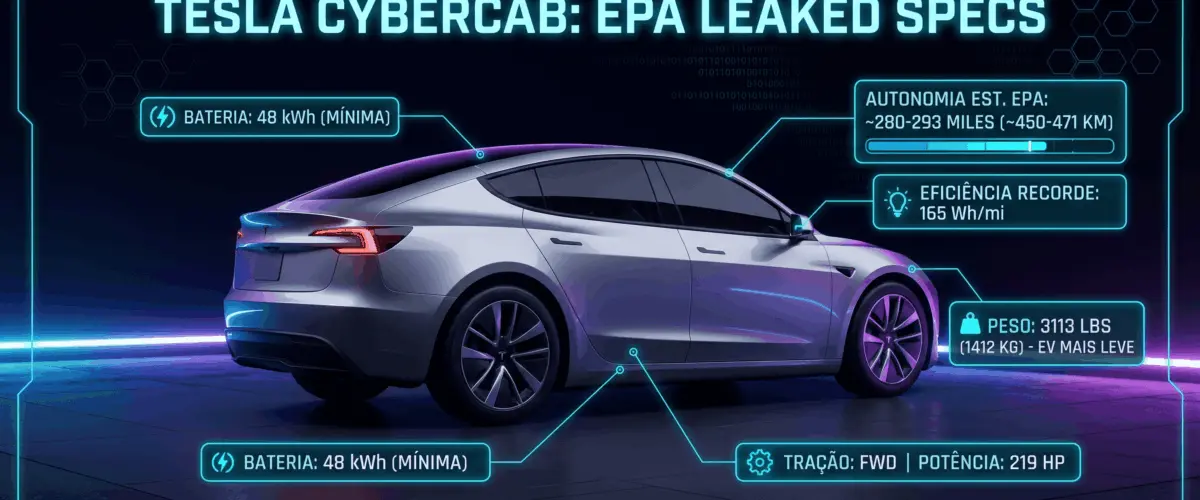
Beyond the obvious specs, what strikes me is the efficiency here. A 48 kWh battery isn’t massive by today’s standards—many EVs out there have larger packs—but achieving an estimated range of 471 km on the EPA cycle is impressive. It points to advancements in powertrain efficiency and lightweight design, something Tesla has consistently pushed. The 219 cv front motor suggests a balance between performance and energy conservation, not aimed at raw power but at practical use cases, likely for urban mobility.
Minha visão sobre o impacto no Brasil
Looking at this from a Brazilian perspective, I have to be honest: there’s no direct, concrete connection yet. Tesla doesn’t operate here with official sales channels, and the Cybercab is still a concept car focused on autonomous robotaxi services, not a production model for consumers. But, in my experience, global EV trends always trickle down, even if slowly.
The risks and opportunities here are more about market signals. If Tesla succeeds with this kind of efficient, smaller-battery EV, it could pressure competitors globally, including those in China and Europe, to innovate. This might eventually lead to more affordable and efficient electric models reaching the Brazilian market, even if indirectly. However, without Tesla’s direct presence, the immediate impact is limited.
O que isso revela sobre a estratégia da Tesla
De acordo com o electriccarsreport.com, these specs come from EPA filings, which are a step closer to production. For Brazil, this reinforces Tesla’s focus on autonomy and efficiency over sheer range or power. As the Brazilian EV market is still nascent, with high import taxes and limited infrastructure, such global advancements set benchmarks that local players and imported models might have to meet in the future.
Impacto para o consumidor brasileiro
For the average Brazilian consumer, this news doesn’t change anything in the short term. We can’t buy a Cybercab here, and autonomous driving regulations in Brazil are still in their infancy. But, it does paint a picture of where the industry is heading. Imagine, for instance, if similar efficient tech filters down to more accessible models like the upcoming Tesla Model 2 or competitors’ offerings.
In concrete terms, this could mean that future EVs in Brazil might offer better range with smaller batteries, reducing costs and improving practicality in our urban environments. However, challenges like high import duties and lack of charging infrastructure remain barriers that specs alone won’t solve.
In my opinion, while the Tesla Cybercab’s specs are exciting for tech enthusiasts, the real takeaway for Brazil is the broader trend toward efficiency. We need to focus on building a supportive ecosystem here—better incentives, local production, and infrastructure—so that when these technologies mature, we’re ready to adopt them.
Eu acredito que o mercado brasileiro deve observar de perto essas inovações, mas sem expectativas imediatas. O impacto será indireto, influenciando decisões de investimento e políticas no longo prazo.
Leituras recomendadas
- Novo eletrólito sólido retém 84% da carga após 350 ciclos
- Elétricos nos 33% na Alemanha e com Skoda no topo: Lição pra cá
- BYD Seal 2026: Autonomia Real de 650 km e Desempenho Esportivo
Fonte: electriccarsreport.com | Curadoria: ATLAS AI | Relevância: 9.5/10

Deixe um comentário